Teach because you love to learn.
A professional teaching-practice portfolio by Niquae McIntosh — English and literacy, EAL/LEARN, science, assessment, and inclusive, relationship-centred learning.
What guides my practice
Learning is strongest when students are known, challenged, and given meaningful ways into the work. My practice brings together disciplinary rigour, language-responsive teaching, formative assessment, cultural responsiveness, and relationship-centred support.
I design for access without lowering expectations, use evidence to adjust instruction, and treat student voice, curiosity, and belonging as conditions for serious learning.
Explore the Practice

-
Reading, writing, discussion, text study, media, poetry and disciplinary literacy — designed to develop confident readers, purposeful writers and thoughtful participants in meaning-making.
Explore English & Literacy →
-
Language-responsive teaching, scaffolding, vocabulary development, multilingual learner support and equitable access to curriculum — with explicit attention to both language growth and disciplinary learning.
Explore EAL / LEARN →
-
Inquiry, disciplinary literacy, scientific thinking and learning across subject boundaries — connecting evidence, language, problem-solving and curiosity across the curriculum.
Explore Science & Cross-Curricular →
-
Formative assessment, responsive instruction, feedback and evidence of learning — using what students show us to adjust teaching, clarify next steps and support meaningful progress.
Explore Assessment & Feedback →
-
Belonging, accessibility, cultural responsiveness, learner agency and relationship-centred teaching — creating conditions in which students can participate fully, take intellectual risks and be known within the learning community.
Explore Inclusive & Responsive Practice →
From philosophy to practice
The record shows continuity rather than reinvention. Early academic tutoring and language teaching precede formal teacher education. The 2021 Gold File and TeachLoveLearn site capture the philosophy while it was still being formed. Later EAL, ELA, literacy, Biology/Science and Grade 7 classroom artefacts show how those ideas became planning, instruction and assessment.
The archive does not need to manufacture a professional identity. It already contains one.
Featured evidence
The work matters more than the claim. These selected artefacts show how planning, instruction, assessment and reflection become visible in practice.
-
![]()
English & Literacy — Planning into Practice
-
![]()
Assessment as Instruction
-
![]()
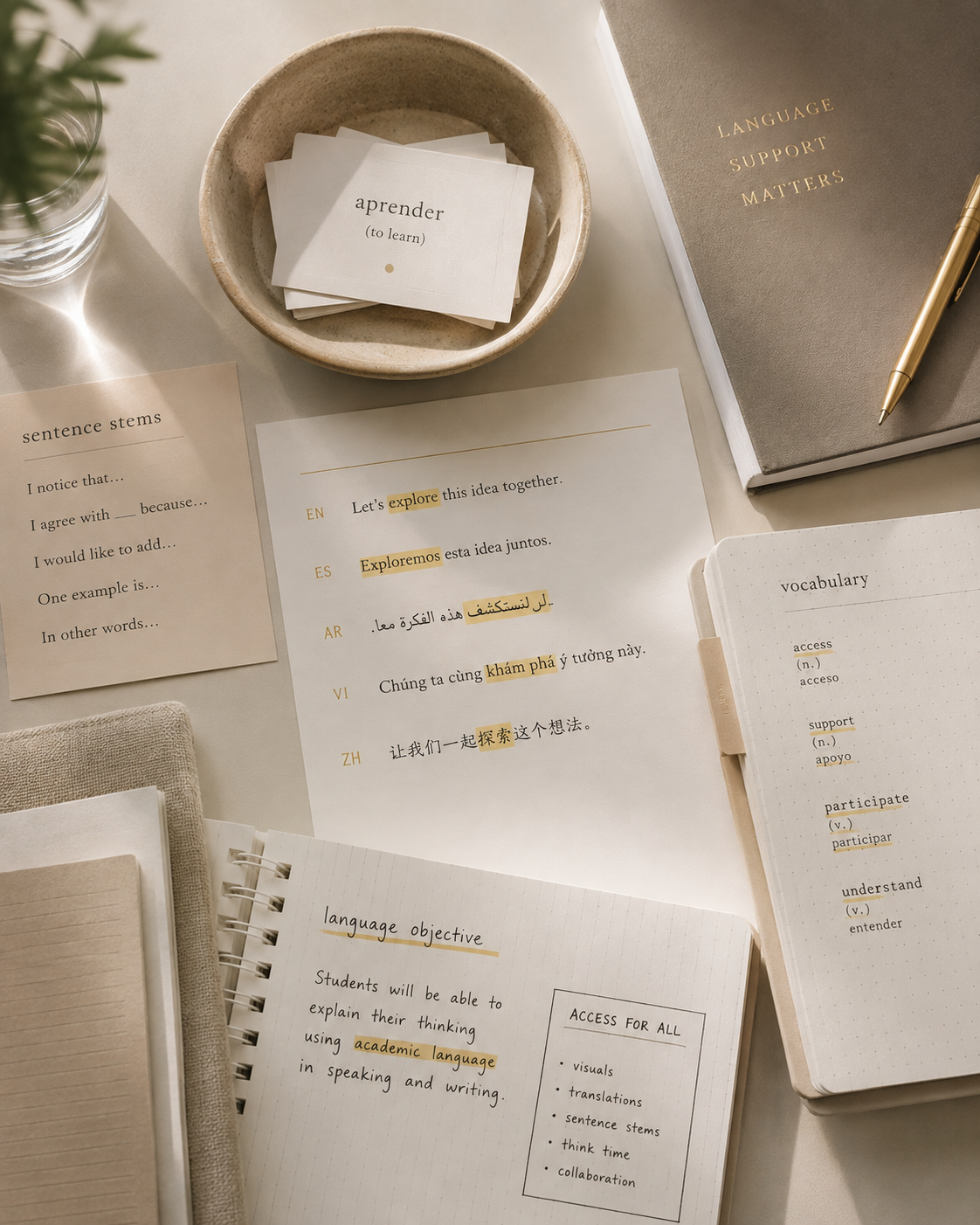
EAL / LEARN — Designing for Access

The beginning
TeachLoveLearn began in 2021 as a public record of an emerging teaching philosophy.
Those original pages remain part of this site as a historical record of teacher formation — preserved rather than silently rewritten to sound as though they were created later.